
Teeth whitening is safe when done correctly, and for most patients, it does not harm the enamel. But it makes sense to have questions before brightening your smile. There are a lot of whitening products on the shelves and plenty of conflicting advice online, so knowing what is safe and what is not can feel confusing.
At SmileWorks, we want every patient to feel confident before starting cosmetic treatment. Our Midtown East Manhattan practice offers professional teeth whitening personalized to your smile, goals, and comfort. We take time to explain the process, protect your teeth, and help you brighten your smile safely.
How Whitening Products Work on Your Teeth
Professional whitening treatments use hydrogen peroxide or carbamide peroxide as their active ingredients. These agents penetrate the enamel and break apart the chemical compounds responsible for discoloration. According to the American Dental Association, hydrogen peroxide can diffuse through the interprismatic spaces in enamel within 15 minutes of exposure, which is why it’s so effective at reaching stains that sit deeper in the tooth structure.
It’s worth noting that enamel itself is not dissolved or stripped away in this process. The bleaching action targets organic chromophores, the colored compounds within the enamel and dentin, rather than the structural integrity of the tooth.
What About Sensitivity?
The most common side effects of whitening are temporary tooth sensitivity and mild gum irritation. For most patients, these symptoms fade within a day or two after treatment ends. Sensitivity can happen because peroxide temporarily makes the enamel more porous, which may affect the nerve inside the tooth.
In most cases, this is manageable and short-lived. If your teeth are already sensitive or you have thin enamel, it is worth talking with your dentist before starting any whitening treatment. That way, you can choose an option that brightens your smile without worsening sensitivity.
The Real Risk: Overuse of At-Home Products
When enamel damage does happen with whitening, it is usually less about whitening itself and more about how the products are being used. Over-the-counter strips, gels, and trays are not designed specifically for your teeth, which can make them easier to overuse. If they are used too often or left on longer than directed, they can start to irritate your teeth and wear down enamel over time.
As part of our cosmetic dentistry services, we take a comprehensive approach to whitening, starting with a thorough evaluation. Our team assesses your current enamel health, identifies any existing restorations (which won’t whiten with bleach), and recommends a treatment plan built around your specific situation.
Professional Whitening vs. Store-Bought Treatments
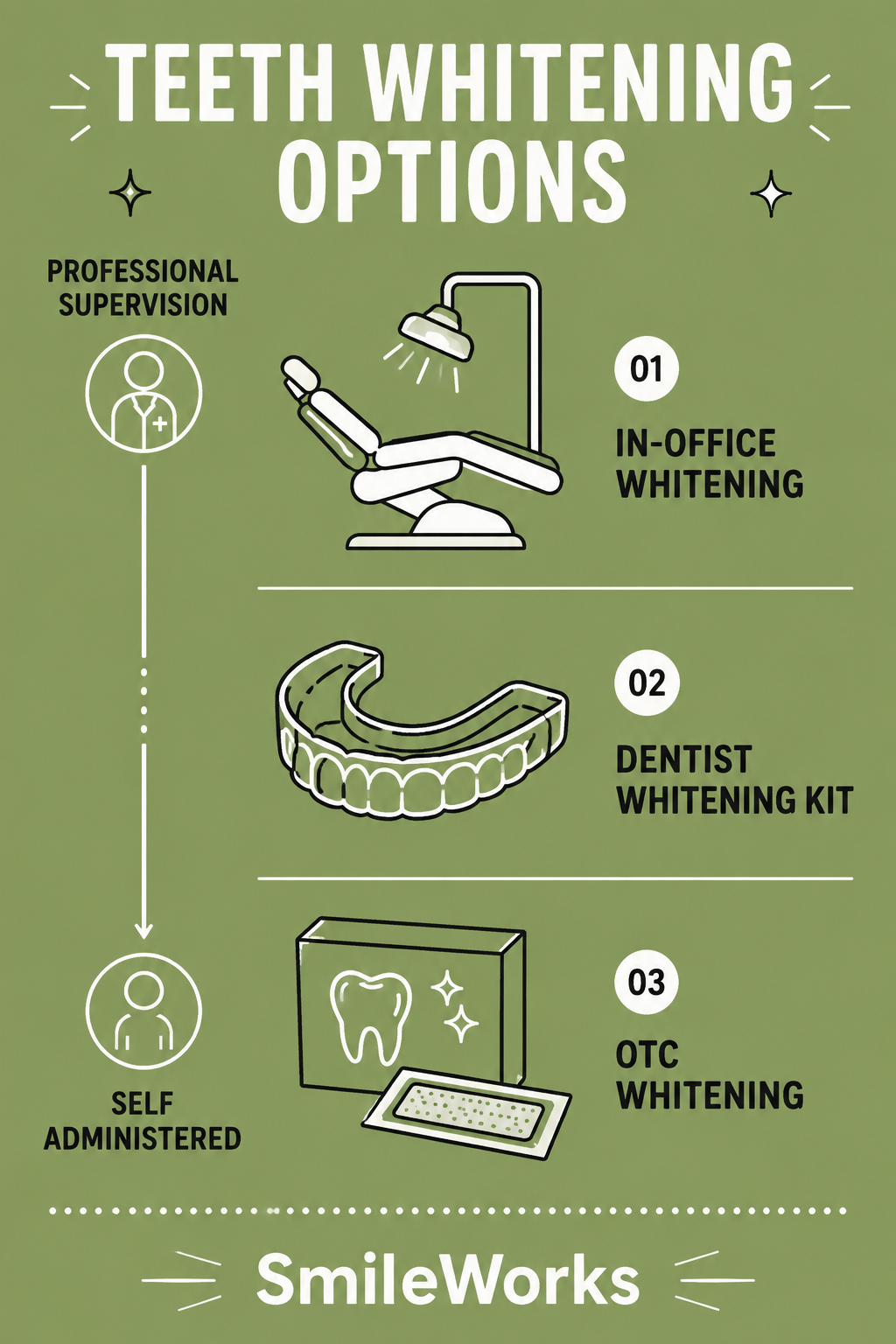
Understanding the differences between your options can help you make a more informed decision:
- Professional in-office whitening: Administered under clinical supervision, with customized trays and professional-strength gel formulated for safe, effective use
- At-home whitening kits from a dentist: Custom-fitted trays made from impressions of your teeth, with dentist-supplied bleaching gel and clear instructions
- Over-the-counter strips and gels: One-size-fits-all products with lower peroxide concentrations that are more prone to misuse and uneven results
The quality of your whitening outcome depends largely on which path you choose. Professional oversight makes a significant difference in both safety and results.
Who Should Be Cautious About Whitening?
Not every patient is an ideal candidate for whitening, and a dental exam is the best first step before starting any treatment. Patients with active cavities, exposed root surfaces, or significant gum recession should address those issues before pursuing bleaching. Whitening agents can cause discomfort or irritation in areas where the enamel is compromised or absent.
Additionally, tooth-colored restorations such as crowns, bonding, and veneers will not respond to bleaching agents the same way natural enamel does. Patients with visible restorations in the smile zone should discuss timing and treatment sequence with their provider to ensure a consistent final result.
Frequently Asked Questions About Teeth Whitening and Enamel Safety
Does professional teeth whitening permanently weaken tooth enamel?
No. Professional whitening targets the stain compounds within enamel and dentin rather than dissolving the enamel itself. Any temporary increase in porosity resolves on its own, and saliva naturally helps remineralize enamel between treatments.
Why do some patients feel sensitivity after whitening?
Whitening gel can temporarily make enamel more porous, which may mildly stimulate the nerve inside the tooth. This sensitivity is usually mild and fades within a day or two, and a dentist can recommend desensitizing products or adjusted wear times for patients who are prone to it.
Is in-office whitening safer than over-the-counter strips and gels?
Professional whitening is performed under clinical supervision with custom-fitted trays and carefully controlled gel strength, which helps protect enamel and gum tissue. Over-the-counter products are one-size-fits-all and are more easily overused, since there is no professional guidance on concentration or wear time.
Will whitening change the color of crowns, veneers, or bonding?
No. Bleaching agents work on natural tooth enamel and will not lighten tooth-colored restorations such as crowns, veneers, or bonding. Patients with visible restorations should talk with their dentist about treatment timing so the new color matches the surrounding teeth.
Who should check with a dentist before whitening?
Patients with active cavities, exposed root surfaces, significant gum recession, or already thin enamel should have those issues evaluated before whitening, since bleaching agents can irritate areas where enamel is compromised. A dental exam beforehand helps confirm that whitening is a safe option.
Brighten Your Smile With Confidence at SmileWorks
Teeth whitening is one of the most popular and well-studied cosmetic dental procedures available, and when performed correctly, it poses no meaningful risk to your enamel. Dr. Jin-Sup Shin and the SmileWorks team bring years of experience and a commitment to patient education to every appointment. Our Midtown East Manhattan practice is equipped with state-of-the-art technology, and we tailor every treatment to your individual needs, ensuring you get the results you’re looking for without compromising the health of your smile. Patients from Kips Bay, the Upper East Side, Chelsea, and beyond trust us to provide care that is both effective and transparent.
If you’re ready to explore what professional whitening can do for your smile, we’d love to help. Contact our office to schedule a consultation and take the first step toward a brighter, healthier-looking smile with a team that puts your long-term dental health first.