Dental Bridges in NYC
When a missing tooth needs to be replaced without surgery, a dental bridge is often the right call. At SmileWorks in Midtown East, Manhattan, Dr. Hyo Sup Shin and our restorative team place custom dental bridges that look and function like natural teeth — typically in just two to three appointments. As a multi-specialty practice at 30 Central Park South, we handle the full scope of your care in one location, from any necessary crown work on anchor teeth to same-day temporaries while your permanent bridge is fabricated.
What are Dental Bridges?
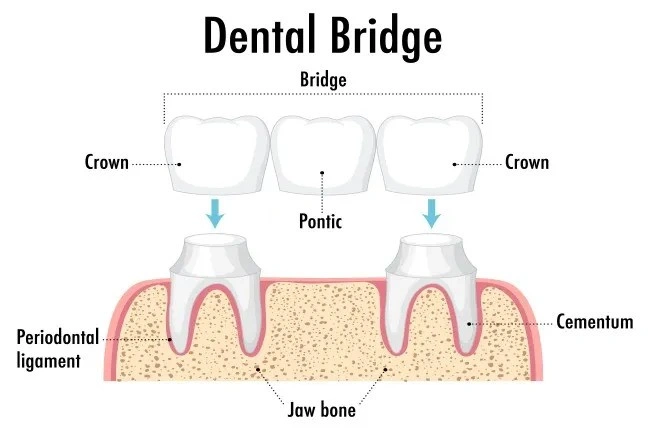
A dental bridge is a fixed restoration that replaces one or more missing teeth by anchoring artificial teeth (pontics) to the natural teeth or implants on either side of the gap. The result is a permanent, non-removable solution that restores your bite, preserves surrounding teeth, and looks natural in your smile.
Unlike removable partial dentures, a fixed bridge stays in place 24 hours a day. It prevents neighboring teeth from drifting into the gap, reduces bone loss risk over time, and lets you eat and speak with confidence. For Manhattan patients who want a faster, non-surgical path to tooth replacement, a dental bridge is one of the most proven options in restorative dentistry.
Complete Family and Orthodontic Dental Care
Comprehensive dental and orthodontic services for beautiful, healthy smiles at every stage of life.

Why Choose Dental Bridges?
Missing teeth affect more than just your smile. Without proper dental bridge treatment, your healthy teeth can shift, leading to:
Gum disease and bite problems
Changes in facial appearance and bone structure
Difficulty eating and speaking
Further tooth loss
A fixed bridge prevents these complications while restoring your oral health.
Who Makes a Good Candidate for Dental Bridges?
In short, a good candidate for dental bridges is someone who has one or more missing teeth but still has teeth (or implants) on either side of the gap. These surrounding teeth are crucial for the process because they will serve as anchors for the bridge. We also say candidates should have good overall oral health, with no signs of gum/bone disease or significant tooth decay. We need your gums to be healthy, as they provide the foundation needed for a secure and stable bridge.
Additionally, a good match is someone who finds themself seeking a non-invasive, durable solution for their missing teeth. If you’re experiencing difficulty chewing, changes in your bite, or are self-conscious about your appearance due to missing teeth, a dental bridge is likely the right solution for you. During your consultation at SmileWorks, we will thoroughly evaluate your oral health and discuss your options. When a tooth can be preserved rather than extracted, we may recommend root canal therapy at SmileWorks Manhattan before placing a bridge, giving you the best long-term outcome.
Our team of experienced dentists can ensure your dental bridge procedure is comfortable, efficient, and stress-free.
Dental Bridges vs. Dental Implants: Why Choose a Bridge?
Both are excellent options for replacing missing teeth — the right choice depends on your bone health, timeline, and how many teeth need replacing. Here is how they compare at SmileWorks Manhattan:
| Factor | Dental Bridge | Dental Implant |
|---|---|---|
| Surgery required | No | Yes |
| Treatment timeline | 2-3 weeks | 3-6+ months |
| Bone grafting needed | Rarely | Sometimes |
| Effect on adjacent teeth | Anchor teeth are crowned | No adjacent teeth affected |
| Bone preservation | Partial | Full (stimulates jawbone) |
| Typical cost | Lower upfront | Higher upfront |
| Longevity | 10-15+ years | Lifetime with crown replacement |
At SmileWorks, we offer both. If you’re weighing the options, we’ll evaluate your bone density, the health of adjacent teeth, and your timeline at your free consultation and give you a clear recommendation rather than a general overview. Learn more about our dental implants in Manhattan if you want to compare both options side by side.
Our team of experienced dentists can ensure your dental bridge procedure is comfortable, efficient, and stress-free.
Types of Dental Bridges Available at Our Manhattan Practice
There are several types of dental bridges to choose from, depending on your specific needs.
Don’t worry — it’s not up to you to choose the type of bridge going into your mouth. The team at SmileWorks is here to help you make the most educated decision possible when it comes to the type of dental bridge you go with.

Traditional Bridges
Traditional bridges use dental crowns on adjacent teeth to support artificial teeth. This fixed bridge option works best when you have strong natural teeth on both sides of the gap.

Cantilever Bridges
Cantilever bridges anchor to teeth on only one side, making them ideal for back teeth where less chewing force occurs.

Maryland Bridges
Maryland bridges use a porcelain fused to metal framework that bonds to your abutment teeth without requiring dental crowns. These resin bonded bridges preserve more of your natural teeth structure.

Implant-Supported Bridges
Implant supported bridges anchor to dental implants rather than natural teeth, providing the strongest solution to replace multiple teeth without affecting healthy teeth.
The Dental Bridge Treatment Process
Your bridge treatment at our New York City practice involves:
Initial consultation and treatment plan development
Preparation of abutment teeth under local anesthetic
Digital impressions sent to our dental lab
Temporary bridge placement while your permanent bridge undergoes bridge fabrication
Final bridge placement using durable materials
Most dental bridge procedures require just 2-3 visits to our Manhattan office.
Why Choose SmileWorks for Dental Bridges in NYC?
SmileWorks is a multi-specialty practice, which means Dr. Hyo Sup Shin and our restorative team can handle every aspect of your bridge case in Midtown East without referring you elsewhere. If an anchor tooth needs a root canal before bridgework can begin, our endodontist handles it in-house. If you need a same-day crown or bridge in select cases, we have the technology to deliver it. If you later decide implants are a better long-term solution, our oral surgery team is already on-site.
We use digital impressions and CAD/CAM technology to fabricate bridges with a precise fit, and we offer same-day temporary bridges so you leave your first appointment with a functional, natural-looking restoration in place. Most patients are surprised by how comfortable the process is. Our Midtown East location is easily accessible from the Upper East Side, Murray Hill, Kips Bay, and Long Island City, and we accept all major PPO insurance plans including Aetna, Cigna PPO, Delta Dental PPO, MetLife PPO, and Guardian.
Frequently Asked Questions About Dental Bridges at SmileWorks NYC
How much do dental bridges cost in NYC and does insurance cover them?
Dental bridge costs in Manhattan typically range from $2,000 to $15,000, depending on the type of bridge, materials used, and number of teeth being replaced. Traditional bridges generally cost $2,000-$5,000 per unit, while implant-supported bridges range from $5,000-$15,000. At SmileWorks, we accept all PPO insurance plans, and most dental insurance covers 50-80% of bridge costs when the treatment is medically necessary. We also accept FSA/HSA funds, which provide additional savings using pre-tax dollars. For patients without insurance, we offer payment plans to make treatment affordable. During your consultation at our Midtown East office, we’ll provide detailed cost estimates and work with your insurance to maximize your benefits.
How long does the dental bridge procedure take?
The dental bridge process typically requires two to three appointments over several weeks. During your first visit (1-2 hours), we’ll prepare the anchor teeth by removing a small amount of enamel and take precise impressions for your custom bridge. We’ll place a temporary bridge to protect the prepared teeth while your permanent bridge is crafted in our dental laboratory. Your second appointment (about 1 hour) occurs 2-3 weeks later when we remove the temporary bridge, check the fit of your permanent bridge, and cement it in place. Some cases may require additional adjustments. At SmileWorks, we use advanced CAD/CAM technology when possible to streamline the process and ensure precise, comfortable results.
Are dental bridges painful and what should I expect during recovery?
Getting a dental bridge is typically comfortable with minimal discomfort. We use local anesthesia during the preparation appointment to ensure you feel no pain while we shape the anchor teeth. After the anesthesia wears off, you may experience mild sensitivity for a few days, which usually responds well to over-the-counter pain medication. With the temporary bridge, you should avoid very hard or sticky foods and chew carefully. Once your permanent bridge is placed, any initial sensitivity typically resolves within a few days as you adjust to the new restoration. Most patients find the procedure much more comfortable than expected. Our gentle approach and advanced techniques at SmileWorks minimize discomfort throughout the entire process.
How long do dental bridges last and how do I care for them?
With proper care, dental bridges typically last 10-15 years or longer. The longevity depends on the materials used, your oral hygiene habits, and lifestyle factors. To maximize your bridge’s lifespan, brush twice daily with fluoride toothpaste and floss daily using special floss threaders or water flossers to clean under the bridge where plaque can accumulate. Avoid chewing hard objects like ice or using your teeth to open packages. Regular dental checkups and professional cleanings at our Manhattan office allow us to monitor your bridge and address any issues early. With excellent oral hygiene and regular professional care, many patients enjoy their bridges for decades while maintaining healthy surrounding teeth and gums.
Can I eat normally with a dental bridge?
Yes, one of the main benefits of dental bridges is restoring your ability to eat comfortably. Initially, stick to soft foods for the first few days after bridge placement to allow your mouth to adjust. Once fully healed, you can eat most foods normally, though we recommend avoiding very hard items like ice, hard candies, or nuts that could potentially damage the bridge. Cut tough or crunchy foods into smaller pieces rather than biting directly into them. Most patients find their chewing function significantly improved compared to having missing teeth. Your bridge is designed to withstand normal chewing forces, allowing you to enjoy a varied, nutritious diet. We’ll provide specific dietary guidelines during your recovery period.
What are the alternatives to dental bridges?
Several alternatives exist for replacing missing teeth, each with distinct advantages. Dental implants offer the most natural replacement by replacing both tooth and root, preserving bone and adjacent teeth. Partial dentures are removable appliances that can replace multiple missing teeth at a lower initial cost but may be less stable. Complete dentures replace all teeth in an arch when extensive tooth loss has occurred. For some patients, no treatment is an option, though this isn’t recommended as missing teeth can cause problems over time. At SmileWorks Manhattan, we’ll discuss all options based on your specific situation, including the number and location of missing teeth, bone health, budget, and timeline preferences to help you make the best decision.
Reclaim Your Smile Today with a Custom Dental Bridge
Missing teeth don’t have to stay missing. At SmileWorks in Midtown East, Manhattan, our restorative team places custom dental bridges that restore your bite, protect neighboring teeth, and look completely natural. We serve patients from across New York City — from Murray Hill and Kips Bay to the Upper East Side and Long Island City — and all new patients receive a free consultation with no commitment required.
Ready to get started? Contact SmileWorks today to schedule your appointment, or call us at 646-722-1177. If you’re also weighing implants, visit our Manhattan dental implants page to compare your options.
Visit Us
We’re conveniently located in Midtown East, Manhattan, making us easily accessible from anywhere in New York. Find us on the 11th floor at 30 Central Park South. Plenty of nearby parking and public transportation options are available to make your visit convenient.
Get directions to our Manhattan office.
- 30 Central Park South Suite #11D New York, NY 10019
- 41 Park Avenue #1A, New York, NY, 10016
- 646-722-1177
- Tues-Fri 9am-6:30pm 1st, 3rd Saturdays 9am-2pm