
Childhood is full of growth milestones, and your child’s teeth are no exception. From that first baby tooth to the emergence of permanent molars in Manhattan, Long Island City, or Queens, each stage brings new dental changes that require careful monitoring. Dental X-rays serve as a window into what’s happening beneath the gum line, revealing cavities between teeth, tracking tooth development, and catching potential problems before they become painful or expensive to treat.
At SmileWorks, our award-winning dental specialists understand that parents want the best care for their children without unnecessary procedures, so we follow evidence-based guidelines to determine when X-rays are truly needed for your child. Our state-of-the-art 3D X-ray technology in Midtown East provides exceptionally clear images while minimizing radiation exposure, helping us keep young smiles healthy throughout New York City.
Factors That Determine How Often Your Child Should Get X-Rays
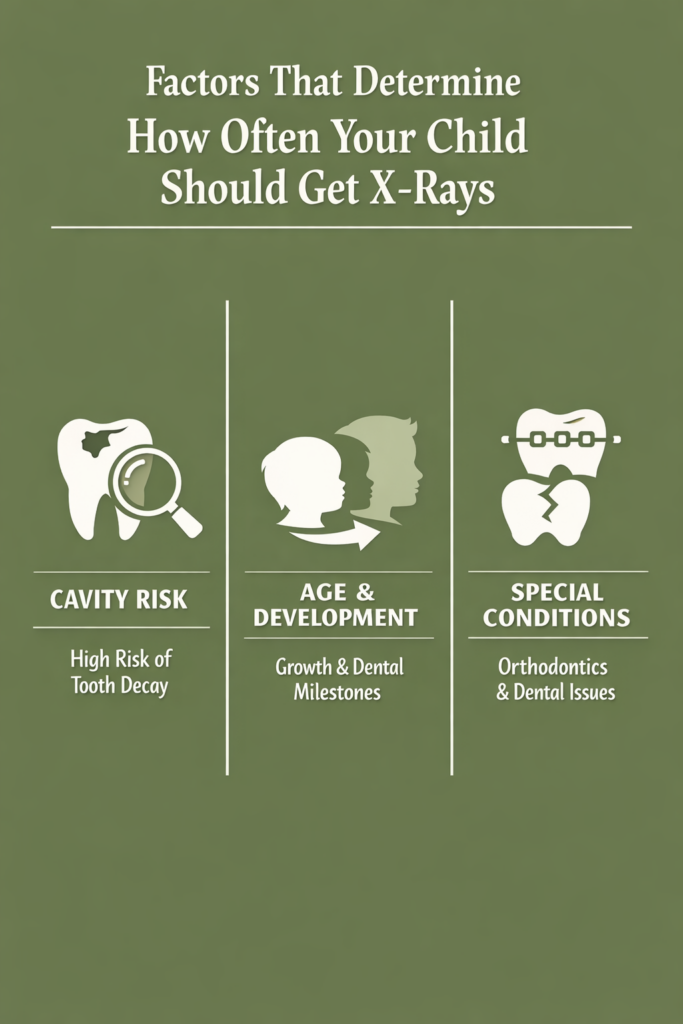
The timing of your child’s pediatric dentistry X-rays depends on several important factors rather than following a rigid schedule. Each child’s oral health journey is unique, so their X-ray needs will be, too. We consider multiple aspects of your child’s dental health before recommending imaging.
Cavity Risk Assessment
Children with a history of cavities or early signs of tooth decay often need more frequent X-rays to monitor their dental health. High-risk children may require bitewing X-rays every six months, while those with healthy teeth and low cavity risk might only need them every 12 to 24 months. We assess this risk by examining factors like diet, oral hygiene habits, fluoride exposure, and whether cavities have appeared in the past.
Age and Developmental Stage
Younger children whose teeth are still developing often need more frequent monitoring than older children with fully established permanent teeth. The eruption of new teeth, particularly molars, creates opportunities for hidden decay that only X-rays can detect. According to the American Academy of Pediatric Dentistry, recommendations for X-ray frequency are based on the patient’s individual circumstances rather than age alone, emphasizing the importance of personalized dental care.
Special Dental Conditions
Children with certain medical or dental conditions may require more frequent X-rays. Those undergoing orthodontic treatments need regular imaging to track tooth movement and jaw development. Children with cleft palate, missing teeth, or other developmental concerns also benefit from closer radiographic monitoring to ensure proper treatment planning.
Types of Dental X-Rays for Children
Different types of X-rays serve different purposes in monitoring your child’s oral health. Understanding these imaging options helps you know what to expect during dental visits throughout Queens, Manhattan, and the surrounding New York areas.
Bitewing X-Rays
Bitewing X-rays are the most common type for children and focus on the upper and lower back teeth. These images excel at detecting cavities between teeth that are not visible during a visual examination. They also show how well dental fillings fit and reveal early signs of gum disease.
Periapical X-Rays
Periapical X-rays capture the entire tooth from crown to root tip, along with the surrounding bone. These images help dentists evaluate root development, diagnose abscesses, assess trauma, and plan treatments like dental crowns when needed.
Panoramic X-Rays
Panoramic X-rays provide a complete view of all teeth, jaws, and surrounding structures in a single image, which dentists use for comprehensive evaluations and to track wisdom tooth development.
X-Ray Safety and Radiation Concerns
Many parents worry about radiation exposure from dental X-rays, which is a completely understandable concern. Modern digital X-ray technology has dramatically reduced radiation levels compared to traditional film X-rays. The amount of radiation from a full set of dental X-rays is extremely low and comparable to the natural background radiation you would receive during a short airplane flight.
Dental practices follow the ALARA principle, which stands for “As Low As Reasonably Achievable,” meaning every effort is made to minimize radiation exposure. Lead aprons and thyroid collars provide additional protection during X-ray procedures. The minimal radiation risk from necessary dental X-rays is far outweighed by the benefits of early detection and prevention of dental problems that could affect your child’s health.
General Guidelines for X-Ray Frequency
While every child’s needs differ, general recommendations provide a helpful framework. Most children should have their first dental X-rays taken when their back teeth begin to touch, typically around age four or five.
Children with healthy teeth and low cavity risk may need bitewing X-rays every 18 to 24 months. Those at higher risk for dental problems typically benefit from X-rays every six to 12 months. Full mouth X-rays or panoramic images are usually recommended every three to five years to monitor overall development and detect issues that bitewings might miss.
Experience Exceptional Pediatric Dental Care at SmileWorks
Your child deserves dental care that’s both thorough and gentle, combining advanced technology with a warm, family-friendly approach. At SmileWorks in Midtown East, Manhattan, our dental specialists treat each patient as if they were our own family, providing smart, caring dental care that creates beautiful and healthy smiles.
Whether your child needs routine monitoring or more frequent X-rays due to specific dental concerns, our team will work with you to create a personalized care plan. We accept all PPO insurance plans and offer free consultations to discuss your child’s dental health needs. Contact our office today to schedule an appointment and learn more about how we can help your child maintain a lifetime of healthy smiles.