Dental Bridges in Murray Hill, NYC
Missing a tooth? A custom dental bridge can fill the gap with a natural-looking, fixed replacement that doesn’t require implant surgery. Our Murray Hill office near Grand Central makes it easy to get your full smile back.
How a Dental Bridge Works
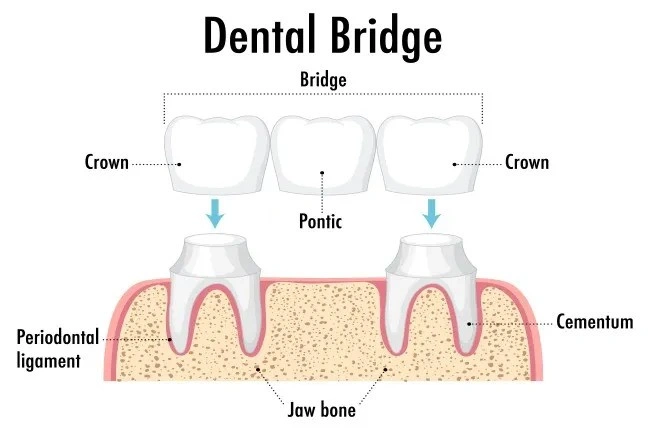
Think of a dental bridge as exactly what it sounds like: a bridge across the space left by one or more missing teeth. It’s made of a replacement tooth, called a pontic, that’s held in place by the healthy teeth or implants on each side. Once it’s cemented, it stays put, so there’s nothing to take out at night.
Bridges are a dependable choice for neighbors in Murray Hill, Kips Bay, and Midtown East who want to restore their bite and their smile without a surgical procedure. Your bridge is shaded to match the teeth around it, so it blends right in. Because the anchor teeth usually get dental crowns, a bridge also adds a layer of protection to those supporting teeth.
One Practice for Your Whole Family's Smiles
General, restorative, cosmetic, orthodontic, and pediatric care, all from our team in Murray Hill.

Why Replace a Missing Tooth?
A gap in your smile isn’t just about looks. Over time, nearby teeth can lean or drift into the open space, your bite can shift, and chewing on that side can feel awkward. Filling the gap with a bridge helps keep your teeth where they belong and makes everyday things like eating and speaking feel normal again.
Are You a Good Candidate for a Bridge?
You may be a great fit for a bridge if you’re missing one tooth or a few teeth in a row and the teeth on either side are strong and healthy. Those neighboring teeth do the heavy lifting, so we check them carefully, along with your gums and the bone underneath, at your first visit.
If the supporting teeth need some care first, such as a filling or gum treatment, we’ll handle that before we start. If the gap is wider or the neighboring teeth aren’t strong enough to anchor a bridge, a dental implant or an implant-supported bridge may be a better fit. Some patients replacing several teeth also consider dentures. We’ll walk you through every option so you can decide with confidence.
Our Murray Hill team makes getting a bridge simple, comfortable, and stress-free.
Choosing Between a Bridge and an Implant
Bridges and implants are both great ways to replace a missing tooth. The best choice for you depends on your bone health, the condition of the neighboring teeth, how many teeth you’re replacing, and how quickly you’d like to finish. The American Dental Association offers a helpful overview of bridges, implants, and dentures if you’d like to read more.
| Dental Bridge | Dental Implant | |
|---|---|---|
| Surgery needed | No | Yes, to place the implant post |
| Typical timeline | A few weeks | Several months, including healing |
| Neighboring teeth | Usually crowned for support | Left untouched |
| Best for | Healthy teeth on both sides of the gap | Good bone support and a longer timeline |
Ready to close the gap? Book your free bridge consultation in Murray Hill.
Bridge Options at Our Murray Hill Office
Not every gap is the same, so not every bridge is either. You don’t have to figure out which type you need. After your exam, Dr. Hyo Sup Shin will recommend the design that fits your teeth, your bite, and your goals.
Traditional Bridges
The most common option. Crowns placed on the teeth on both sides of the gap hold the replacement tooth securely in place.
Cantilever Bridges
Supported by a tooth on just one side, this design can work well when only one neighboring tooth is available.
Maryland Bridges
Also called resin-bonded bridges, these attach to the backs of the neighboring teeth with small wings, so very little natural tooth needs to be reshaped.
Implant-Supported Bridges
Anchored to dental implants instead of natural teeth, these are a sturdy choice when you’re replacing several teeth in a row.
What to Expect When You Get a Bridge
1. Consultation and planning. We examine the area, take digital scans and X-rays, and talk through your options.
2. Preparing the anchor teeth. After numbing the area, we gently shape the supporting teeth and take precise digital impressions. You’ll leave with a temporary bridge.
3. Placing your final bridge. Once your custom bridge is ready, we check the fit, color, and bite, then cement it in place.
Why Murray Hill Patients Trust SmileWorks for Bridges
Because SmileWorks is a multi-specialty practice, Dr. Hyo Sup Shin, a general dentist trained at the NYU College of Dentistry, and our team can manage your bridge from start to finish without sending you across town. If an implant turns out to be a better fit, that care is available within our practice too. For patients who need a faster turnaround, ask about same-day crowns and bridges.
Our office at 41 Park Avenue is an easy walk from Grand Central and convenient for anyone in Murray Hill, Kips Bay, or Midtown East. We accept many PPO plans and are happy to check your insurance benefits before treatment. See all the services we offer nearby on our Murray Hill dental office page.
Dental Bridge FAQs for Murray Hill Patients
How much does a dental bridge cost in Murray Hill, and will insurance help?
Your cost depends on the type of bridge, the materials, and how many teeth are being replaced. Because bridges restore function, many PPO plans cover part of the cost. We’ll review your benefits and give you a clear estimate at your consultation before any work begins.
How many visits does a bridge take?
Most bridges take two or three visits spread over a few weeks. The first prepares the anchor teeth and fits a temporary, and the next places your custom bridge. If you need other treatment first, we’ll plan around it.
Does getting a bridge hurt?
We numb the area before preparing your teeth, so you should feel pressure but not pain. Afterward, some tenderness or mild sensitivity is normal for a few days and usually eases with over-the-counter pain relief.
How do I take care of my bridge?
Brush twice a day, and clean under the replacement tooth daily with a floss threader or water flosser. Keep up with regular checkups so we can monitor the bridge and the supporting teeth. Good care helps your bridge last for many years.
Can I eat my favorite foods with a bridge?
Yes. Stick with softer foods for the first few days while you get used to it, then you can return to most of your usual meals. It’s still smart to avoid chewing ice or very hard candy, which can damage any dental work.
What other options are there for a missing tooth?
Dental implants replace both the tooth and its root and don’t rely on neighboring teeth. Partial or full dentures are removable options for replacing several teeth. We’ll explain the pros and cons of each so you can choose what fits your health and lifestyle.
Fill the Gap in Your Smile in Murray Hill
A missing tooth doesn’t have to stay that way. At our Murray Hill office, our team creates custom bridges that restore your bite, support your neighboring teeth, and look like a natural part of your smile. Book your free consultation online or reach out through our contact page, and we’ll help you find the right fit.
Visit Us
We’re conveniently located in Midtown East, Manhattan, making us easily accessible from anywhere in New York. Find us on the 11th floor at 30 Central Park South. Plenty of nearby parking and public transportation options are available to make your visit convenient.
Get directions to our Manhattan office.
- 30 Central Park South Suite #11D New York, NY 10019
- 41 Park Avenue #1A, New York, NY, 10016
- 646-722-1177
- Tues-Fri 9am-6:30pm 1st, 3rd Saturdays 9am-2pm